
Heather Cherry
NBC-HWC, IC-FHS, CPT, NTP, Content Strategist
As a personal trainer, your job isn’t to diagnose or treat pain. (Scope reminder: Personal trainers do not diagnose, treat, or promise to prevent injuries. Corrective exercise improves movement quality and supports safer training decisions.)
But you do create programs that help clients move better—with improved technique and clearer progressions, and reduced risk of training-related movement issues. That’s the benefit of corrective exercise and why a structured credential matters.
National Academy of Sports Medicine (NASM) Corrective Exercise Specialization (CES) helps you understand how clients move and adjust their training accordingly. NASM CES uses a repeatable model of assessment, pattern recognition, and targeted programming.
We’ve created a guide for helping you understand Corrective Exercise Specialization, how it supports coaching, and helps reduce unnecessary movement compensations that contribute to training disruptions.
This guide is for:
- Anyone wondering what corrective exercise is and how it fits within personal trainer scope without crossing into clinical diagnosis.
- Career switchers comparing corrective exercise programs or searching for the best corrective exercise credential .
- Certified Personal Trainers who want to increase confidence with movement assessment for trainers and exercise modification strategies.
- Coaches working with clients who have common limitations or movement inefficiencies, or recurring compensations during foundational lifts.
- Newer personal trainers who want a specialization that makes programming clearer, safer, and more individualized.
Mini Quiz: Is NASM Corrective Exercise Specialization Right for You?
Purpose: This self‑assessment helps you determine whether NASM Corrective Exercise Specialization aligns with your clients, coaching needs, and career goals.
Note: This is a decision‑support quiz—not a test of knowledge.
Question 1: Primary Client Type
What best describes the clients you work with most often?
A. Mostly general fitness beginners or weight‑loss clients.
B. Clients with movement limitations, compensations, or recurring aches that affect exercise selection.
C. Athletes or performance‑focused clients (speed, power, sport prep).
D. Older adults or longevity‑focused clients (mobility, balance, staying active).
Question 2: Frequency of Modifications
How often do you need to modify exercises because a client can’t perform a movement comfortably or with good form?
A. Rarely.
B. Sometimes (a few clients).
C. Often (most sessions).
D. Almost every session.
Question 3: Handling Movement Limitations
When a client struggles with a movement pattern (e.g., squat, hinge, overhead press), what do you usually do first?
A. Swap the exercise and move on.
B. Try a regression based on experience or intuition.
C. Use a quick screen or assessment to guide regressions and progressions.
D. Explain what injury they likely have and prescribe rehab exercises.
Note: If you chose D, personal trainers should not diagnose or prescribe rehab. This indicates that a scope of practice review is needed.
Question 4: Assessment Confidence
How confident are you using movement assessments to guide program design?
A. Not confident yet.
B. Somewhat confident, but inconsistent.
C. Confident for most clients.
D. Very confident—I want a more systematic process.
Question 5: Common Client Scenarios
Which scenario sounds most like what you see in sessions?
A. Desk‑work posture or tightness patterns impacting movement quality.
B. Overhead limitations that affect pressing or pulling.
C. Runners with recurring compensations or “nagging” issues.
D. Postpartum clients rebuilding strength and movement confidence (within trainer scope).
Question 6: Primary Outcome Goal
What outcome matters most to you right now?
A. Improving programming safety and reducing risk through smarter exercise selection.
B. Maximizing athletic performance.
C. Improving flexibility, mobility, and longevity.
D. Supporting behavior change and nutrition outcomes.
Question 7: Reason for Specialization
What’s your primary reason for adding a specialization?
A. I’m newer and want more confidence coaching clients with movement limitations.
B. I want a specialization that stacks with Certified Personal Trainer and expands who I can help.
C. I want to stand out in a performance‑focused niche.
D. I want a longevity or mobility‑focused niche.
How to Interpret Your Results
Mostly A’s → You’d benefit from a structured method for safer programming and movement corrections. Corrective Exercise Specialization is a strong fit.
Mostly B’s → Corrective Exercise Specialization aligns extremely well with your current client base and growth goals.
Mostly C’s → You may prefer Performance Enhancement Specialization, but Corrective Exercise Specialization still improves assessment and pattern quality for athletes.
Mostly D’s → Corrective Exercise Specialization pairs well with Senior Fitness Specialization or Certified Wellness Coach for longevity‑focused populations.
What is Corrective Exercise?
Corrective exercise is a structured approach to help clients move with better control, coordination, and efficiency through evidence-based observation and targeted exercise strategy. It’s not about diagnosing medical issues or treating pain. But it does focus on understanding how a client moves today and choosing exercises that help them perform better tomorrow, with appropriate regressions and progressions.
At its core, corrective exercise is about identifying compensations, improving mobility and stability, addressing underactive and overactive muscle tendencies, and reinforcing high‑quality patterns during strength and conditioning work. Corrective exercise guides exercise selection and coaching techniques for long‑term progress and supports safer programming decisions.
It's not a replacement for medical care, but corrective exercise significantly refines a personal trainer’s ability to design safer, more intentional programs.
Corrective exercise is not:
- Clinical diagnosis.
- Guarantee of pain relief.
- Medical or therapeutic intervention.
- Promise to prevent injuries (personal trainers influence movement quality, not medical outcomes).
- Replacement for physical therapy or sports medicine.
- Solution for structural issues.
How Corrective Exercise Improves Movement Quality
Corrective exercise uses movement assessments to understand how a client’s body is working and identify compensations that influence program design. It provides science‑supported strategies that help clients move with better control, coordination, and efficiency across major movement patterns.
Here’s how corrective exercise supports better training and reduces disruptions tied to poor movement quality.
1. Observation and Pattern Recognition
Most movement issues show up long before a client ever lifts a heavy load. They often appear in foundational patterns like:
- Hip hinges.
- Overhead movements.
- Pushing and pulling.
- Stepping and gait.
- Squatting.
These patterns reveal where a client tends to shift, rotate, limit range, or rely on momentum instead of stability. Recognizing trends early reinforces movement they can control.
2. Overactive and Underactive Muscles
Corrective exercise highlights joint mechanics' influence on movement and how imbalances contribute to compensation, including:
- Overactive (compensating or doing “too much”) muscles.
- Underactive (not contributing enough to the movement) muscles.
This isn’t a diagnosis, but an observation-based model that stays within the fitness scope, including:
- How to cue the movement.
- When a mobility drill may help.
- When exercise regressions/progressions areappropriate.
- When stability work is more effective.
3. Range of Motion and Mobility Strategies
Corrective exercise adds targeted techniques to help clients have more functional range of motion, improving:
- Control.
- Coordination.
- Joint positioning.
- Technique under load.
Again, the goal isn’t treatment. It’s preparing the body for better training.
4. Strength and Integration
Corrective exercise isn’t solely mobility focused. The range of motion work supports strength training, including:
- Controlled tempo work.
- Progressions that gradually increase complexity.
- Stabilization drills.
- Unilateral training.
5. Load Tolerance and Progression
Corrective exercise shows you how to build programs acknowledging each client’s current capacity—progressively challenging them over time. When a client moves better, they can train with:
- Clearer path to progression.
- More consistent reps.
- More efficient force transfer.
- Reduced compensations.
6. Client Education and Awareness
Clients often don’t realize how their daily habits contribute to movement patterns. Corrective exercise gives you simple, non-medical ways to explain:
- How specific warm-ups or drills help.
- What “better movement” looks and feels like.
- Why certain compensations show up.
- Why regressions aren’t a setback—they’re a strategy.
This builds buy‑in and promotes better long-term technique.
Real‑World Use Cases
Corrective exercise is most valuable when you’re with a client who moves differently than expected. Below are common, scope‑appropriate scenarios personal trainers encounter every day. It also illustrates how Corrective Exercise Specialization helps you create a clear, repeatable plan.
Scenario 1: The Desk‑Bound Professional with Rounded Shoulders
A 38‑year‑old office worker spends 8 to 10 hours per day seated. During assessments, you notice forward rounding in the shoulders and limited thoracic (mid-back) extension. Their row and overhead press feel “tight,” and they struggle to maintain ribcage and spine alignment.
What corrective exercise helps you do:
- Choose regressions such as half‑kneeling presses or supported rows to reinforce stability.
- Cue scapular movement and rib positioning to promote more efficient overhead control.
- Identify common compensations (e.g., elevated shoulders, excessive lumbar extension during pressing).
- Implement activation work for the mid‑back and core to promote better alignment.
- Use mobility drills for thoracic extension and lats to help improve available range of motion.
Outcome: The client performs training with more control. They have better posture awareness, and fewer technique breakdowns as loads increase.
Scenario 2: The Client with Limited Overhead Mobility
A healthy adult can squat and hinge well but struggle with overhead lifting. In an overhead squat assessment, you notice arching through the low back or arms drifting forward.
What corrective exercise helps you do:
- Apply targeted work and mobility drills to improve shoulder and upper‑back motion.
- Progress movements only when the client demonstrates consistent pattern control—not only strength.
- Regress overhead work to landmine presses, kettlebell bottom‑up carries, or incline angles.
- Understand how limited hip, shoulder, or thoracic mobility can influence overhead patterns.
- Use isolated activation (serratus anterior, lower traps, deep core) to reinforce stabilizing roles.
Outcome: The client gains confidence and consistency with overhead movement. They improve their techniques, preparing for more advanced training options.
Scenario 3: The Recreational Runner with Hip or Ankle Movement Inefficiencies
A recreational runner wants cross‑training support. During your movement assessment, you see ankle collapse, hip drop, or trunk sway during single‑leg work. They don’t report pain; they just want to feel stronger and more stable.
What corrective exercise helps you do:
- Choose progressions like step‑downs → single‑leg RDL (Romanian deadlift) regressions → loaded single‑leg strength.
- Coach alignment and tempo to encourage controlled joint positions.
- Highlight how cross‑training supports better running mechanics (without crossing into gait analysis or treatment.)
- Integrate foot‑ankle mobility, glute activation, and core stability strategies.
- Spot patterns that limit force transfer or efficiency in single‑leg movements.
Outcome: The client develops stronger single‑leg control. This makes strength sessions more productive and helps them feel steadier during runs.
Scenario 4: The Postpartum Client Rebuilding Core Coordination (Within Certified Personal Trainer Scope)
A postpartum client (cleared for exercise) wants to rebuild strength and confidence. During assessments, they have difficulty with deep core engagement. They also have little hip stability during unilateral exercises.
What corrective exercise helps you do:
- Add breath‑based core activation drills (within scope—not clinical rehab).
- Integrate glute and mid‑back activation to improve alignment in compound lifts.
- Progress only when the client demonstrates consistent control and confidence.
- Regress to supported patterns to build control safely.
- Use the movement assessment to identify which patterns need more stability or control.
Outcome: The client feels supported and empowered. And they’re able to move through progressively challenging strength work with better stability and core activation.
Scenario 5: The Strong Client with Technique Breakdowns Under Load
A seasoned lifter has plenty of strength but shows compensations when load increases. Compensations like knees caving during heavy squats, back arching on overhead press, or hips shifting during deadlifts.
What corrective exercise helps you do:
- Adjust programming variables (volume, load, complexity) to align with the client’s movement capacity.
- Encourage refined technique rather than chasing load at the expense of pattern quality.
- Introduce tempo work, pauses, and unilateral training to reinforce symmetry and control.
- Recognize when movement quality changes as intensity rises.
- Use mobility and activation strategies to prepare for better positioning.
Outcome: The client lifts more efficiently and sustainably, enhancing their training potential.
What You Learn in NASM CES
Corrective exercise gives you a clear path to assess and select movement using NASM’s Corrective Exercise Continuum (CEC) model, supporting clients with intentional and personalized programming.
NASM CES illustrates this structured workflow in depth, helping you build safer and more confident programming decisions, including:
- Applying myofascial techniques, stretching, isolated strengthening, and multi-joint strategies.
- Assessing movement patterns.
- Building intentional, individualized warm‑ups.
- Coaching cues for better technique.
- Designing regressions and progressions.
- Identifying underactive and overactive patterns.
- Recognizing common compensations.
- Referring clients appropriately when needed.
Who Should Get NASM CES
NASM CES is a strong fit for:
- Certified Personal Trainers who want more confidence in modifying exercises.
- Career switchers comparing the best corrective exercise programs.
- Personal trainers who value technique, long‑term development, and safety.
- Personal trainers working with desk‑bound clients or those with common movement limitations.
- Newer trainers needing a clearer method for choosing exercises.
Corrective Exercise Is a Great Fit If You:
- Coach clients with desk‑bound lifestyles or movement limitations.
- Desire to understand how clients move.
- Need more confidence modifying exercises.
- Value technique and long‑term training success.
- Want a structured method for choosing exercises.
- Wish to design specific and individualized warm-up protocols.
Corrective exercise course pairs well with other NASM specializations:
- Certified Nutrition Coach (CNC)
- Certified Wellness Coach (CWC)
- Performance Enhancement Specialization (PES)
- Senior Fitness Specialization (SFS)
- Women's Fitness Specialization (WFS)
Corrective Exercise vs Other Specializations
Here’s the simplest way to compare corrective exercise specialization (NASM CES) to other options:
- Corrective Exercise: Improve client movement quality.
- Nutrition Coaching: Build healthier eating habits.
- Performance Enhancement: Elevate athletic performance.
- Senior Fitness: Support health, fitness, and independence for older adults.
- Wellness Coaching: Strengthen stress management, sleep, and daily lifestyle habits.
- Women’s Fitness: Support women through hormonal changes, pregnancy, menopause, and more.
How Corrective Exercise Supports Your Career
Corrective exercise helps you stand out because it provides deeper movement knowledge and clearer coaching strategies.
Corrective Exercise Specialization has many benefits, including:
- Build confidence.
- Improve programming precision.
- Make sessions feel more personalized.
- Open opportunities with more client types.
- Strengthen professional credibility.
- Support more consistent client progress.
Corrective Exercise Frequently Asked Questions: What Personal Trainers Need to Know
These frequently asked questions summarize the key points personal trainers search for when comparing best corrective exercise programs.
What Does a Corrective Exercise Specialist Do?
A corrective exercise specialist guides clients toward better movement during exercise sessions. They identify common compensations, choose modifications, coach efficient techniques, and design warm-ups or mobility work. These approaches support smoother, more controlled patterns. The role stays within fitness scope and does not diagnose or treat medical conditions.
Who Is a Corrective Exercise Course For?
Corrective exercise is ideal for clients who struggle with movement quality—whether they're beginners, returning to fitness, desk‑bound adults, recreational athletes, or those who feel tight, imbalanced, or uncoordinated. Corrective exercise course is for personal trainers who want to identify movement dysfunction and create programs that improve control, stability, and overall performance.
Do I Need Experience Before Starting a Corrective Exercise Certification?
Personal Trainer Certificate or Certified Personal Trainer certification should come first, but it is not a requirement. Becoming a personal trainer confirms you understand exercise technique, safety principles, and program design before adding deeper movement‑analysis skills.
How Does Corrective Exercise Continuum Address Posture Challenges?
Corrective Exercise Continuum addresses posture challenges by providing a structured process to identify static posture and movement dysfunction to restore optimal alignment. Personal trainers learn to assess compensations—such as rounded shoulders, limited hip mobility, or unstable core patterns—and apply targeted strategies in four stages. This approach builds awareness, mobility, and control within a fitness scope, helping clients achieve better posture without crossing into medical treatment.
How Can Injury Prevention for Trainers Fit into Personal Training Sessions?
Injury‑prevention strategies fit naturally into personal training sessions by being woven into warm‑ups, movement prep, and strength work. Personal trainers use mobility drills, activation exercises, and stability training during the warm‑up to address individual movement limitations. During the workout, corrective elements can be added between sets or regressions and progressions to reinforce better mechanics. Strength and conditioning remain the core of the session, but they become more intentional and personalized to reduce injury risk and improve long‑term performance.
How Does Corrective Exercise Differ from Physical Therapy?
Physical therapy evaluates, diagnoses, and treats injuries or medical conditions. Corrective exercise focuses on improving movement patterns during exercise. Pain, swelling, numbness, or other medical concerns should be evaluated by a healthcare provider.
When is a Corrective Exercise Specialization Worth Considering?
A corrective exercise specialization is for personal trainers who coach clients with technique or mobility dysfunctions. This skill set supports clearer assessments and more confident programming decisions. It contributes to stronger client relationships and expanded career opportunities.
How Long Does a Corrective Exercise Course Take?
Most learners complete the program within a few weeks to a few months, depending on study pace. The program is self‑paced. Adjust speed based on your schedule and preferred learning style.
How Can Corrective Exercise Specialist Pair with Other Specializations?
Corrective exercise strengthens any specialization that relies on assessing patterns, teaching techniques, and progressing exercises with intention.
What Equipment Do I Need for Corrective Exercise?
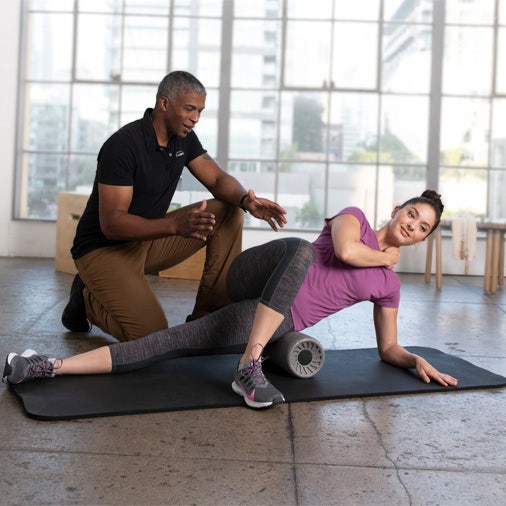
Common gym tools (bands, benches, foam rollers, light weights, and open floor space) cover most needs. Corrective exercise is less about equipment and more about supporting cleaner, more controlled movement patterns.
Next Steps: Build Confidence in How You Train
Enhance your skill set for coaching real‑world clients. Corrective Exercise Specialization strengthens your approach to movement and program design, helping you deliver smarter, more efficient results session after session.