*Check official sources for pass rates.
Understanding Accreditation
Accreditation is a primary concern candidates consider when comparing NASM-CPT and ISSA CPT.
Here's what it means.
NCCA Accreditation
The National Commission for Certifying Agencies (NCCA) accredits professional certification programs that meet established credentialing standards.
Many commercial gyms reference NCCA-accreditation in job postings when listing certification requirements. NASM-CPT meets NCCA‑accreditation requirements referenced in many commercial gym job postings.
The ISSA-CPT is not accredited by NCCA or any other independent accreditation body.
Why Does ISSA Claim Accreditation?
In October 2020, ISSA acquired National Council for Certified Personal Trainers (NCCPT), which offered an NCCA-accredited personal trainer certification program. The NCCPT accredited certification exam continues to be offered by ISSA. Only that exam is accredited.
In 2025, only 734 candidates took and passed the NCCPT exam and the total number of professionals with that credential was only 1,652. Based on repeated ISSA-attributed disclosures cited by independent reporters, the number of ISSA CPTs is thought to be between 475,000 and 500,000. If you only take the ISSA-CPT, you will not have an accredited credential.
Why Accreditation Matters
For candidates seeking employment in commercial gym environments, accreditation type can affect eligibility. Some employers explicitly require NCCA‑accredited certifications, while others take a broader approach.
When Accreditation Matters Less
For independent training, online coaching, or entrepreneurial fitness businesses, employer accreditation requirements are typically less central. In these settings, client outcomes, experience, and specialization often play a larger role.

About NASM-CPT
NASM Certified Personal Trainer (CPT) credential has supported fitness professionals since 1987 and is recognized across commercial gyms, private studios, and independent training environments worldwide. The NASM-CPT has been accredited by NCCA since 2005 and maintained accreditation consistently.
NASM has supported more than 1.9 million fitness professionals across 100+ countries and maintains partnerships with thousands of gyms and health clubs globally. This reach has made NASM-CPT a familiar credential across a wide range of fitness settings.
NASM-CPT emphasizes structured frameworks, evidence‑informed decision‑making, and applied professional development—designed to support personal trainers not only in passing the exam, but in building consistency and confidence in real‑world coaching.
NASM also shows measurable career impact. In a survey of 1,133 active trainers (including competitor certifications), NASM Certified Personal Trainers reported earning 22% more on average than industry peers.
In the first one to three years, NASM trainers report earning 65.5% more than those with non-accredited or lower-barrier certifications. NASM Certified Personal Trainers reach an average hourly rate of $48.29 within their first year, while many trainers with other credentials take significantly longer to reach that level.
That early advantage shapes how you start and grow your career.
Scientific Foundation and Professional Oversight
NASM-CPT content is developed and peer‑reviewed by a multidisciplinary team of researchers, clinicians, and industry practitioners, with guidance from NASM’s Scientific Advisory Board. This process ensures alignment with current research, professional standards, and best practices in exercise science and human performance. It also ensures that the certification exam is psychometrically sound, unbiased, and administered fairly.
NASM also contributes to the broader body of fitness knowledge through scholarly initiatives such as evidence‑based review papers and the Journal of Fitness, Wellness, and Human Performance.
Structured Framework for Program Design
NASM’s Optimum Performance Training™ (OPT™) provides a structured system for assessment-informed program design. It integrates foundational principles such as movement quality, progressive overload, adaptation, and integrated training—offering a consistent framework that can be applied across populations, goals, and training environments.
While the program follows a structured framework, each learner controls their approach to the materials, their study schedules, and the pace they proceed through the content.
This structure appeals to personal trainers who value:
- Clear progression models.
- Consistency across clients.
- Repeatable system for program design.

Purpose‑Built Learning Experience
NASM’s CPT program is designed to support comprehension and application, not memorization alone.
Learners engage with:
- AI‑supported study tools (ClaireAI™) to reinforce understanding and exam preparation.
- Knowledge checks, chapter quizzes, and section reviews throughout the content.
- Instructional exercise videos demonstrating coaching cues, form, and sequencing.
- Interactive anatomy resources.
The learning experience emphasizes why programming decisions are made—supporting practical application from the first client session forward.
Integrated Professional Ecosystem
NASM extends beyond certification through an ecosystem of connected tools and resources. Platforms such as NASM One™ and the NASM EDGE™ trainer pro app support program delivery, assessment workflows, and ongoing application in professional settings—helping bridge the gap between certification and day‑to‑day coaching.
Career Growth and Ongoing Development
NASM offers a range of professional credentials, including certifications and specializations, allowing personal trainers to expand their expertise.
Ongoing development is supported through:
- Academic collaborations, including scholarship initiatives with higher‑education institutions.
- Continuing education.
- Industry partnerships.
- NASM Podcast Network.
Where NASM-CPT Takes Your Career
NASM-CPT is often used as a foundational credential for personal trainers who want to build layered expertise. Complementary certifications in areas such as nutrition coaching and wellness coaching, and specializations in behavior change, corrective exercise, and performance enhancement allow for focused growth across multiple client populations.
In practice, this empowers you to do more than guide workouts. Early on, that may look like helping general population clients improve movement quality, build strength, and stay consistent. As experience grows, those same programming decisions become more intentional: adjusting for movement limitations, progressing clients safely, and aligning training with specific outcomes like fat loss, strength gains, or performance improvements.
To guide and standardize these increasingly complex decisions is why NASM developed the OPT model. The OPT™ model provides a structured framework and is an adaptable system. That consistency makes it easier to deliver results, build client trust, and refine your coaching approach.
NASM-CPT are credentials that carry weight:
- Build toward advanced credentials.
- Develop consistency across programming decisions.
- Support clients with performance-oriented or progression-based goals.
- Work within a structured, assessment-driven training model.
About ISSA CPT
ISSA has offered fitness education since 1988 and is a provider of online certification programs.
Its current platform places a strong emphasis on accessibility and speed to entry, with visible monthly pricing, simplified checkout, and bundled credential options designed to help candidates get started quickly.
The experience is designed to be straightforward for first-time buyers. Pricing is easy to understand, enrollment is streamlined, and the platform highlights customer reviews and hiring-related messaging intended to support new candidates evaluating their first certification.
Study Format
ISSA CPT follows a self‑directed learning model without a proprietary programming framework. Some candidates prefer this approach while others prefer a more structured system.
Exam Structure
The ISSA CPT exam is open‑book and untimed. Candidates can pause and resume testing over multiple sessions.
For candidates seeking NCCA-accreditation, ISSA offers access to a separate exam administered by the NCCPT, an independent NCCA-accredited certifying organization.
Pricing Approach
ISSA emphasizes bundled credential options that combine CPT with additional certificates. NASM also offers bundles and tiered pricing. When comparing bundle value, candidates may wish to consider accreditation type, employer requirements, and credential equivalency rather than quantity alone.
How to Evaluate These Differences
ISSA’s model prioritizes convenience and accessibility. For candidates looking to enter the industry quickly, those features can make the process easier to navigate. At the same time, certification structure plays a role in how credentials are evaluated in professional settings.
Many employers, especially commercial gyms, look for NCCA-accredited certifications as part of their hiring standards. In those cases, ISSA candidates may need to complete the additional accredited exam to meet those requirements. Very few take that step (only 1,095 in 2025 compared to the over 22,000 who attempted the NASM accredited exam in 2025).
When comparing options, it often comes down to what matters most for your career:
- Certification built around standardized testing, structured programming, and broad employer recognition; or
- A fast path to getting started.
Understanding that distinction ensures your certification aligns not just with how you want to learn, but where you want to work.
Which Gyms Accept NASM vs ISSA?
Gym acceptance is a common consideration when comparing personal trainer certification credentials.
Here's what you need to know.
Where NASM-CPT Is Accepted
NASM-CPT is commonly referenced in commercial gym job postings and is accepted across many national and regional gym brands. This acceptance aligns with NCCA-accreditation requirements frequently cited by employers.
Where ISSA CPT Is Accepted
ISSA CPT is accepted at many gyms, though acceptance varies by employer. Positions that specify NCCA‑accredited certification may require additional credentialing.
Recommendation: Always verify certification requirements directly with your target employer before committing to a learning program.
Cost Considerations for NASM vs. ISSA CPT
Both NASM-CPT and ISSA CPT offer promotional pricing and payment plans. Comparing cost alone may not reflect differences in employer eligibility, exam requirements, or learning format. Candidates often weigh upfront investment alongside long‑term career goals and work environment.
Exam Structure and Preparation
While both the NASM-CPT and ISSA CPT exams are designed to assess foundational personal training knowledge, but they differ in structure, administration, and testing format. Preparation approaches and exam experiences may vary depending on learning preference and accreditation pathway.

NASM-CPT Exam
- 120 questions.
- Closed-book, proctored.
- 180-minute time limit.
The NASM-CPT exam is aligned with NASM’s OPT Model. Exam content reflects assessment-based programming, exercise science principles, and applied decision-making within a defined framework. It is trusted to reflect comprehension of the materials and the competency to provide safe and effective fitness training to members of the public.
ISSA CPT Exam
- 200 questions.
- Open-book, untimed, unproctored.
- No fixed time limit per session.
The ISSA CPT exam allows candidates to reference course materials during testing and complete the assessment over multiple sessions without a time limit.
As noted above, ISSA candidates have access to the NCCPT accredited certification exam which is proctored, timed and closed book.
Pass Rates
Both organizations report exam outcomes for the NCCA-accredited exams they offer. The pass rate for the NASM-CPT in 2025 was 84%; the pass rate for the NCCPT in 2025 was 67%.
Pass rates vary year to year and are influenced by factors such as preparation time, study approach, and prior experience. Please note that ISSA CPT is not accredited and the pass rate advertised by ISSA for that offering is not verifiable.
ISSA vs. NASM: Which Is Better for Your Goals?
There is no universal best personal trainer certification. Many personal trainers find their choice comes down to how each organization’s frameworks, resources, and professional pathways align with their personal interests and career goals.
Here’s what to consider as you align the credential with your career goals.
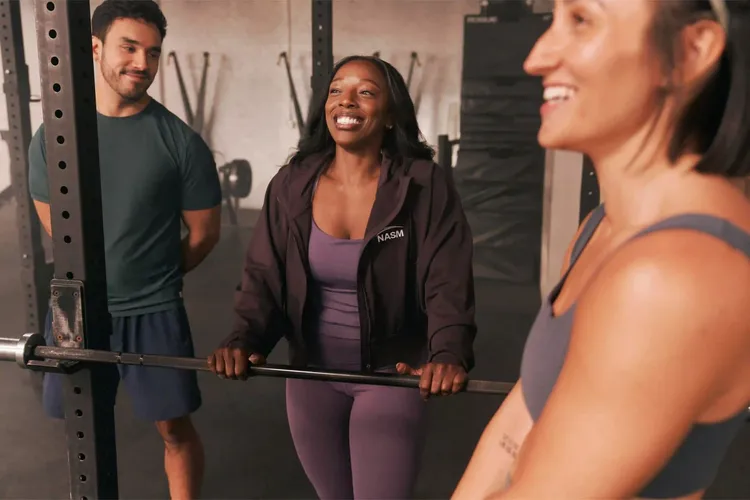
Scenario 1: Which certification is better if I want to work at a commercial gym?
NASM-CPT may be the better fit, as many commercial gyms list NCCA-accredited certifications as a hiring requirement, and NASM meets those requirements. ISSA CPT is not accredited, so acceptance may vary by employer.
Scenario 2: Which certification should I choose if I want to build an online coaching business?
Both NASM-CPT and ISSA CPT can serve as strong foundations for online or independent coaching. In these settings, success is influenced more by niche focus, client communication, and business strategy than by certification type.
Scenario 3: Which certification is better if budget is my primary constraint?
ISSA offers bundled pricing that may appeal to candidates prioritizing upfront cost. NASM offers tiered packages with different levels of study support and applied learning resources. Candidates often weigh cost alongside employer requirements and learning preferences.
Scenario 4: Which certification is better if I want a structured programming framework?
NASM-CPT may be the better option, as it includes the OPT Model, a defined framework for program design. ISSA CPT emphasizes flexible, self-directed application without a single proprietary model.
Scenario 5: Which certification can I complete more quickly?
ISSA CPT may be completed on a shorter timeline due to its unstructured format and open book exam. NASM-CPT uses a proctored, closed book exam with structured preparation tools, so completion time varies by individual.
Scenario 6: Which certification is better if I want to add nutrition or wellness credentials?
Both NASM and ISSA offer additional certifications in nutrition and wellness. Candidates may consider how these credentials align with their learning preferences and long-term professional goals.

NASM VS. ISSA: Certification Questions Candidates Commonly Ask
Is NASM Harder than ISSA?
The exams are structured differently. NASM-CPT uses a closed‑book, proctored, timed exam, while ISSA CPT offers an open‑book, self‑paced exam option. Perceived difficulty varies based on learning style, preparation, and familiarity with the testing format.
Is ISSA NCCA‑accredited?
ISSA CPT is not accredited. ISSA offers access to an NCCA-accredited certification exam through the National Council for Certified Personal Trainers (NCCPT). This is a separate exam pathway. In 2025, 734 candidates passed the NCCPT exam, compared to 19,338 candidates who passed NASM’s NCCA-accredited CPT exam.
Can I Get a Job with an ISSA Certification?
It depends on the employer. Some organizations require NCCA‑accredited certifications, while others accept a broader range of credentials. Candidates should review job postings to confirm requirements.
Which Certification do More Personal Trainers Hold?
NASM-CPT has certified over 1.9 million professionals worldwide and is commonly referenced in commercial gym job postings. Representation alone does not determine career fit.
What Is ISSA’s Job Guarantee and Does It Apply to the Standard CPT?
ISSA promotes a job guarantee and hiring partner network on its website. The job guarantee is tied to passing the NCCA-accredited exam through the NCCPT. It does not apply to the standard ISSA CPT exam alone. Candidates should review the requirements of each pathway to understand which credential is needed for eligibility.
Is NASM or ISSA Better for Beginners?
Both certifications are used by entry‑level personal trainers. NASM-CPT may appeal to those who prefer structured study tools and defined frameworks, while ISSA CPT may suit those who prefer a less structured approach to learning.
Can I Hold Both NASM and ISSA Certifications?
Yes. Some personal trainers choose to hold multiple certifications to support different professional goals.