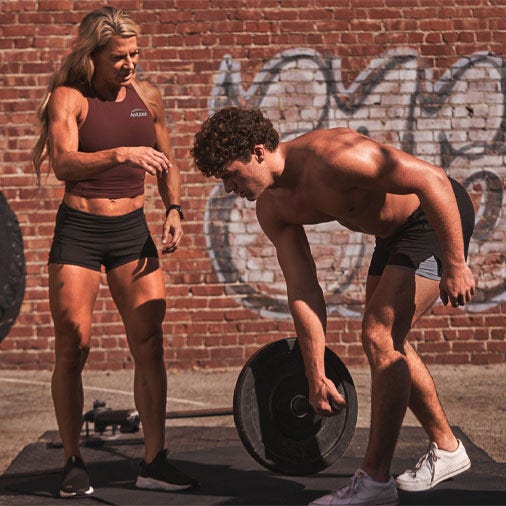
Most clients start a new fitness goal with excitement. But after a few weeks—when the novelty wears off and progress slows—commitment becomes tougher. This is the moment personal trainers can make the biggest impact—not by pushing harder, but by introducing structure, clarity, and purpose.
One of the most effective ways to do that? Applying bodybuilding principles.

Heather Cherry
NBC-HWC, IC-FHS, CPT, NTP, Content Strategist
Bodybuilding isn’t just for competitive athletes. At its core, it’s about progressive overload, consistency, and intentional programming. This is the exact framework clients need when motivation dips and long-term habits matter most. Bodybuilding principles create predictable progress for anyone, whether the goal is fat loss, strength, improved posture, or confidence.
To learn more, we sat down with Andre Adams, a professional athlete with the International Federation of Bodybuilding (IFBB) pro league, and competitor in the 2015 Mr. Olympia and Arnold Classic professional physique divisions. He is also a master trainer with National Academy of Sports Medicine (NASM), host of NASM Peak Physique Podcast, physique contest prep coach, and holds several NASM specializations.
Why Bodybuilding Principles Work for Everyday Client Goals
Even if a client has zero interest in stepping on a stage, the science and structure behind bodybuilding can dramatically improve their results and consistency. Unlike many traditional strength programs—often centered on performance metrics like maximal load—physique training places additional emphasis on muscular development, balance, symmetry, and execution quality.
Both approaches use compound lifts, but physique programming adds targeted volume, tempo, and recovery to shape the body, not just move weight. “Many people think bodybuilding is just for the genetically gifted or drug-enhanced, but at its core, it’s simply disciplined resistance training with intention,” Adams said. “The same methods used to build physiques can safely improve posture, metabolism, and mental resilience in clients.”
“Bodybuilding is an art—it's an outward expression of hard work, vision, consistency, and passion,” he said.
Predictable, Measurable Progress
This concept—known as progressive overload—is one of the most well-established principles in exercise science. It can be as simple as:
- Better execution.
- Controlled tempo.
- One more rep.
- Small load increases.
These micro-wins create momentum, which is especially important when clients feel stuck.
Intentional Programming Removes Guesswork
Random workouts make progress hard to measure and even harder to sustain. The body adapts best when training follows a clear, intentional pattern—not when exercises, intensity, and goals shift unpredictably. “When the process improves, the physique always follows. Shift from outcome goals to process goals—better lifts, better recovery, better execution,” Adams said. “Build a foundation of consistency in habits and routines. Think about the “Think about the ‘Ain’t Done Yet’ mindset—committing to getting 1% better each day.”
Bodybuilding-style programming removes the guesswork by giving clients a structured roadmap, including:
- Clear progression: Predictable paths forward that increase difficulty in small, manageable steps.
- Confidence-building consistency: Routines clients can trust, making long-term adherence far easier than relying on motivation alone.
- Structured phases: Training blocks designed to build, refine, and recover, without burnout or plateaus.
- Visible markers of improvement: Strength increases, better execution, and measurable performance changes.
With this approach, you can help clients stay committed because they see and feel their progress. “Trainers who explain timelines and expectations, plateaus, and biological reality help clients stay patient and committed instead of frustrated and reactive,” Adams said.
Full-Body Benefits That Go Beyond Aesthetics
Physique training delivers a structured approach to improve how clients move, feel, and function daily. And these benefits carry into every part of life. As strength, control, and muscular balance improve, clients often experience practical wins that go well beyond what they see in the mirror, including:
- Bone density: Progressive resistance training increases skeletal strength and supports long‑term orthopedic health.
- Improved glucose uptake and metabolic efficiency: Better nutrient partitioning.
- Joint stability: Stronger supporting muscles and improved control.
- Metabolic health: Increased lean mass and long-term metabolic support.
- Movement quality: Better mechanics and coordination during daily activities.
- Posture: More balanced musculature and better alignment.
- Self-efficacy: Greater confidence in physical ability and long-term capability.
Realistic for All Fitness Levels
Despite common misconceptions, bodybuilding isn’t extreme or inaccessible. It can be one of the safest and most scalable forms of resistance training when programmed appropriately. It’s simply disciplined, intentional strength work designed to make clients feel and perform their best.
How Physique Training Helps Clients Stay Committed Over Time
As you know, commitment—not motivation—is what produces lasting results. Bodybuilding concepts help clients stay engaged because they offer structure, clarity, and a sense of achievement.
Here’s how you can apply bodybuilding principles in your personal training sessions.
1. Progress Tracking Beyond the Scale
Progress doesn’t always show up as weight loss. Bodybuilding-style tracking highlights wins such as:
- Clothing fit.
- Energy and recovery.
- Improved exercise execution.
- Measurements.
- Muscle engagement, pump and workout performance.
- Strength increases.
This gives clients more reasons to stay committed, even when aesthetic changes feel slow.
2. Layered, Strategic Adjustments
After a few weeks, clients often try to overhaul their routine. Redirect that impulse into smarter changes:
- Improving technique cues.
- Refining movement selection.
- Reinforcing recovery habits.
- Slightly increasing volume.
Physique training teaches clients that consistency—not drastic change—is the real driver of progress. “Consistency improves when training feels purpose-driven instead of punishing,” Adams said. “Structured programming, coaching accountability and check-ins, achievable weekly targets, and visible performance wins keep clients engaged long after motivation dips.”
3. Mindset Anchored in Process, Not Perfection
Progress isn’t linear when it comes to bodybuilding. Apply that mindset to your sessions, and help clients:
- Avoid all-or-nothing thinking.
- Reframe plateaus.
- Stay patient.
- Value effort over perfection.
“Mindset determines whether a plateau becomes a quit point or a growth phase. Personal trainers support commitment by reinforcing effort-based wins and reminding clients that consistency beats perfection every time,” Adams said. “Understanding a client’s ‘why’ helps trainers apply the right tools to support lasting behavior change.”
How to Introduce Bodybuilding Concepts Without Overwhelming Clients
Most clients don’t need advanced splits or intensity techniques. Keep it simple and systematic. “The biggest mistake is doing too much too soon—adding volume, cardio, or restriction all at once. Progress accelerates when clients earn intensity instead of chasing it. Monitor signs of physical or mental burnout and overreach,” Adams said.
Start With Movement Mastery
For beginners, start with simple, structured full-body sessions 2 to 3 times per week or an upper and lower split. These formats support movement mastery, allow for consistent practice, and prevent overload while establishing early training habits.
Add isolations as needed for balance or targeted goals, but focus on key patterns:
- Carry
- Hinge
- Lunge
- Press
- Pull
- Squat
Track One or Two Metrics First
Add consistent progress photos (same lighting, angles, and timing) to help clients “see” muscular changes that aren’t reflected on the scale. What gets measured gets done, and photos are one of the clearest ways to illustrate physique development.
Early wins build long-term buy-in. Help clients see progress quickly by following:
- Better execution.
- Improved range of motion (ROM).
- Load progression.
- Rep personal records (PRs).
Introduce One New Lever at a Time
Clients stay committed when the plan feels achievable, not overwhelming. For example:
- Week 1–3: Technique and consistency.
- Week 4–6: Progressive overload.
- Week 7+: Gradual increases in volume (training density) or intensity.
- Reinforce Recovery as a Training Tool
Encouraging healthy habits—sleep, recovery, hydration, and nutrition—enhance training outcomes. “Teaching protein awareness, meal consistency, hydration, and recovery habits align nutrition with training goals while staying within scope,” Adams said. “This improves their relationship with food and empowers smart daily micro decisions.”
A Practical, Sustainable Model for Client Success
Bodybuilding principles don’t require perfection or extreme effort. Instead, they rely on:
- Execution.
- Consistency.
- Incremental progress.
- Patience.
- Smart programming.
For personal trainers who want to hear how physique‑focused concepts translate into real‑world client programs, check out NASM’s Peak Physique Podcast, featuring insights from Adams.
In the episode, What Every Lifter Learns Too Late (published January 21, 2026), Adams dives into long‑term success strategies, including progression, recovery management, and the mindset required to sustain results over time.
“Physique training isn’t about doing the most—it’s about doing what matters consistently. When clients improve their process by even 1% each week, the results become inevitable,” Adams said in the episode.
This episode is packed with practical takeaways personal trainers can apply right away with clients of any level—including those working toward long‑term physique goals.
Elevate Your Coaching: Physique & Bodybuilding Coach Specialization
If you’re ready to help clients build stronger, confident, and more capable bodies through structure, progression, and research‑driven physique principles, NASM Physique & Bodybuilding Coach (PBC) specialization is your next step.
Empower your clients with intentional programming. Strengthen their consistency. Deliver the kind of results that keep them coming back.