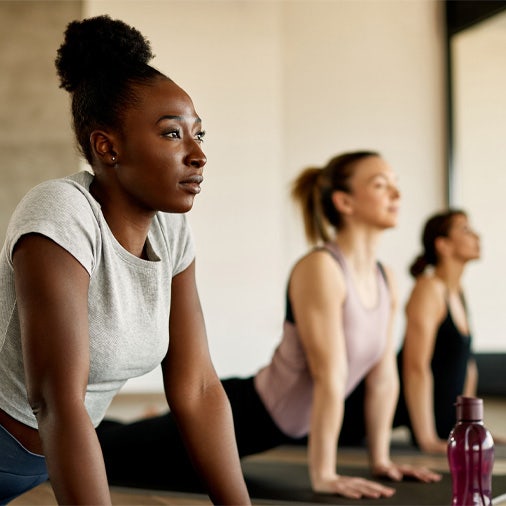
For fitness and wellness professionals, yoga isn’t just a trend. It’s a powerful tool that improves performance, boosts recovery, and supports mental clarity.
At NASM, we believe in a well-rounded approach to fitness. Yoga plays an essential role in that philosophy. Whether you’re a certified personal trainer, a wellness enthusiast, or someone exploring new methods, adding yoga to your routine can strengthen your impact and deepen your understanding of the mind-body connection.

Heather Cherry
NBC-HWC, IC-FHS, CPT, NTP, Content Strategist
Why Yoga Matters for Fitness and Wellness Professionals
Yoga for fitness professionals is gaining popularity as a complementary practice to traditional training. The benefits of yoga in fitness are focused on three key areas: physical performance, recovery, and mental health.
Physical Performance
A practice known for improving joint mobility, stretching muscles, and enhancing posture, yoga combines mindful movement, breathwork, and sustained poses that activate and lengthen major muscle groups.
For example, poses like Downward Dog and Warrior II promote dynamic stability by strengthening supportive muscles around the joints. These movements increase flexibility through active and passive stretching—improving alignment and body awareness. This integrated approach lubricates joints, releases muscle tension, and builds strength in postural muscles.
Recovery
Studies show that yoga’s combination of postures, breathing, and relaxation may further activate the parasympathetic system (network of nerves that relaxes your body after periods of stress or danger). Yoga promotes recovery by improving circulation, relaxing tight muscles, and activating the body’s natural healing systems.
Poses like Bridge and Pigeon release tension in overused areas, while breathing techniques reduce inflammation and support tissue repair. Yoga also improves body awareness—your ability to sense where your body is in space—which is key for preventing injuries and enhancing coordination.
Mental Health
Yoga’s mindfulness and meditation focus are powerful stress reducers that support mental health. Mindfulness and mediation improve cognitive function by calming the nervous system and enhancing brain activity. Deep, controlled breathing activates the parasympathetic response (part of the autonomic nervous system that controls involuntary bodily functions), lowers cortisol levels (stress hormone) and promotes relaxation.
Mindfulness and meditation practice promotes emotional regulation and mental clarity by training your attention span and reducing rumination (repetitive, negative, and unhelpful thinking).
Additionally, yoga boosts levels of GABA—a neurotransmitter that regulates mood and reduces anxiety.
What Is GABA and Why Is It Important?
GABA is a neurotransmitter—a chemical that helps control brain activity. It keeps the nervous system balanced and calm. Low GABA levels are linked to anxiety, depression, and mood disorders. Whereas increased GABA supports the brain’s ability to manage stress and maintain emotional stability.
How Yoga Boosts GABA
A study from Boston University found that people who practiced Iyengar yoga with breathing exercises had higher GABA levels after 12 weeks. (Iyengar yoga emphasizes alignment, sequencing, and the use of props to make poses accessible and therapeutic.) GABA levels increased after each session and remained elevated for up to four days. For most clients, practicing yoga once a week is enough to maintain these benefits.
Harvard Health Publishing supports these findings, noting that yoga improves mood by increasing GABA and calming the emotional center of the brain. Brain imaging studies show that regular yoga practitioners have increased thickness in areas related to memory, learning, and attention.
How Yoga Complements Strength and Cardio Training
While yoga doesn’t replace high-intensity training, it fills significant gaps by supporting recovery, flexibility, and mental focus. Adding yoga to warm-ups, cool-downs, or recovery days creates a balanced fitness routine.
Yoga completes the training trifecta—bridging strength, cardio, and recovery for total body results. It activates stabilizer muscles, refines movement patterns, and builds muscular endurance. Styles like Vinyasa and Power Yoga can raise your heart rate and offer both strength and cardio benefits.
Supporting Client Goals with Yoga
Yoga is flexible and adaptable to fit many client goals—from improving performance to supporting emotional health. Coaches can use yoga-inspired techniques to enhance programs and improve results.
Suitable for All Fitness Levels
Because of yoga’s versatility, it can be modified for beginners, older adults, and elite athletes. Adjust poses and combinations based on level of mobility, strength, and experience. For example:
- Athletes benefit from advanced balance or power-focused flows.
- Beginners may need props for added support.
- Injured clients respond well to gentle, resorative sequences.
Weight Loss, Performance, and Functional Movement
Yoga goes beyond flexibility—it’s a dynamic tool for building strength, enhancing recovery, and sharpening mental focus. By integrating targeted techniques, you help clients move better, recover faster, and train smarter.
- Functional Movement: Boosts circulation, reduces stiffness, and supports healing.
- Performance: Enhances body awareness, strengthens the core, and improves muscle control.
- Recovery: Speeds up healing, reduces the risk of future injuries, and supports active rest.
- Weight Loss: Reduces stress, promotes physical activity, and encourages consitency.
Building Long-Term Wellness Habits
Yoga helps clients build habits that support both physical and mental health. Through breathwork, mindfulness, and intentional movement, clients learn habits that support long-term wellness.
- Build emotional resilience and confidence to improve commitment to fitness goals.
- Listen to their bodies and recognize signs of fatigue or imbalance.
- Manage stress more effectively to support recovery ad hormone balance.
NASM’s Yoga-Inspired Learning Opportunities
To help professionals integrate these benefits into their coaching, NASM offers a range of programs that reflect yoga’s core principles. For example, group fitness programs, like certified yoga instructor program are available through NASM yoga certification brand, The Athletics and Fitness Association of America™️(AFAA).
As a longstanding part of the NASM family, AFAA has been at the heart of this movement for over 40 years, offering cutting-edge training, expert-led instruction, and an evolving approach to group fitness. AFAA empowers fitness professionals to lead with confidence, coach with purpose, and innovate movement experiences. Backed by NASM, every step, rep, and beat is supported by expert training and a legacy of excellence.
Discover how to create energizing, morning-focused yoga sessions that promote vitality and mindfulness with AFAA’s Sunrise Yoga Specialization.
NASM also offers certifications and specializations that reflect yoga’s core principles—supporting mindful movement, flexibility, and holistic wellness through evidence-based fitness insights.
NASM’s Certified Wellness Coach (CWC) program complements yoga’s mind-body connection by focusing on intentional movement, emotional well-being, and sustainable lifestyle change, including:
- Behavior Change and Emotional Wellness: Support clients in building sustainable habits that reduce stress and promote balance.
- Coaching Techniques: Use motivational interviewing and client-centered strategies to guide meaningful lifestyle transformations.
- Mindful Movement vs. Exercise: Shift the focus from performance to presence, helping clients move with intention and awareness.
NASM’s Stretching and Flexibility Coach (SFC) program teaches evidence-based techniques that mirror many physical benefits of yoga in fitness, including:
- Anatomy and Physiology: Understand how stretching affects muscles and joints.
- Mindful Movement and Recovery: Use breath and movement to support healing and reduce stress.
- Technique and Application: Guide clients safely through different types of stretching.
Amplify your impact of yoga for fitness professionals with NASM’s Group Fitness Instructor certification. With this credential, you’ll be ready to motivate, educate, and elevate every class or client experience. Pair it with NASM’s Certified Personal Trainer (CPT) or Corrective Exercise Specialization (CES) to further enhance performance, reduce injury risk, and unlock greater mobility and flexibility for every client.
Tips for Using Yoga-Inspired Techniques
You don’t have to be a certified yoga instructor to integrate its powerful techniques. Yoga techniques can enhance client results, including:
- Guide Mindful Movement: Cue clients to sync breath with movement—such as inhaling during upward motions and exhaling during downward motions—to improve focus and body awareness throughout each session.
- Support Self-Practice: Equip clients with simple, coach-approved resources clients can use independently to build consistency and reinforce movement habits.
- Integrate Yoga into Warm-Ups and Cool-Downs: Use poses like Cat-Cow to mobilize the spine, Downward Dog to activate posterior chains, and Pigeon to release hip tension—enhancing recovery and movement quality before and after workouts.
Yoga-inspired techniques offer a unique advantage in recovery—helping clients restore mobility, reduce stress, and build resilience between workouts. Make yoga part of your coaching toolkit to support recovery, prevent injury, and reinforce mindful movement across every phase of training.
Integrate recovery into your coaching. Explore NASM bundles, Certified Wellness Coach, or Stretching and Flexibility Coach to learn more about mobility, recovery, and mindful movement.

Become a Performance Enhancement Specialist
Learn The Latest Science In Athlete Performance